Sac Concussion Assessment Tool
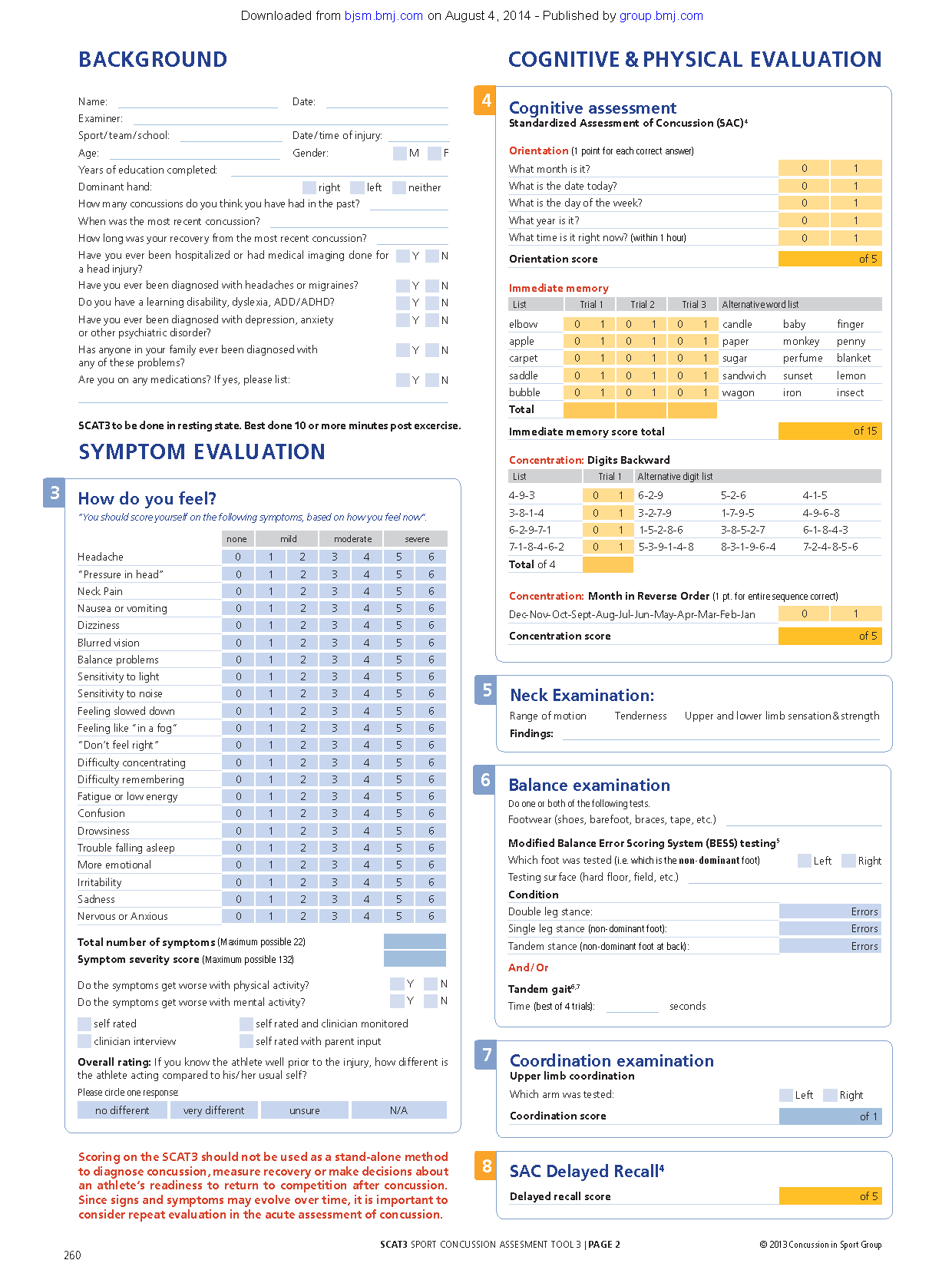
Sport Concussion Assessment Tool – 3rd edition. Download Buku Perilaku Organisasi. Standardized Assessment of Concussion (SAC) 4 orientation (1 point for each correct answer) Whatmonthisit? Standardized Assessment of Concussion tool allows abbreviated sideline evaluation of attention and memory before more comprehensive neuropsychological testing.
OBJECTIVE Over the last 2 decades, sport-related concussion (SRC) has garnered significant attention. Even with increased awareness and athlete education, sideline recognition and real-time diagnosis remain crucial. The need for an objective and standardized assessment of concussion led to the eventual development of the Sport Concussion Assessment Tool (SCAT) during the Second International Conference on Concussion in Sport in 2004, which is now in its third iteration (SCAT3). In an effort to update our understanding of the most well-known sideline concussion assessment, the authors conducted a systematic review of the SCAT and the evidence supporting its use to date. METHODS English-language titles and abstracts published between 1995 and October 2015 were searched systematically across 4 electronic databases and a review was conducted in accordance with the Preferred Reporting Items for Systematic Reviews and Meta-Analyses (PRISMA) guidelines adapted for the review of a heterogeneous collection of study designs.
Marshall Lead 12 Combo Manual Woodworkers here. Peer-reviewed journal articles were included if they reported quantitative data on any iteration of the SCAT, Standardized Assessment of Concussion (SAC), or modified Balance Error Scoring System (mBESS) data at baseline or following concussion in an exclusively athlete population with any portion older than 13 years of age. Studies that included nonathletes, only children less than 13 years old, exclusively BESS data, exclusively symptom scale data, or a non–SCAT-related assessment were excluded. RESULTS The database search process yielded 549 abstracts, and 105 full-text articles were reviewed with 36 meeting criteria for inclusion. Nineteen studies were associated with the SAC, 1 was associated with the mBESS exclusively, and 16 studies were associated with a full iteration of the SCAT.